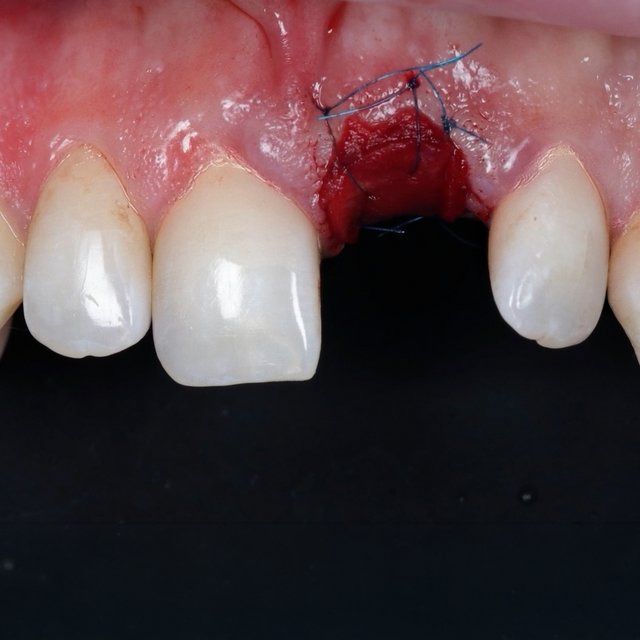
Incorporating Ridge Preservation into practice

Incorporating ridge preservation into your practice is one of the most effective ways to improve long-term outcomes after tooth extraction.1 As regenerative dentistry becomes increasingly central to treatment planning, clinicians recognize that maintaining ridge dimensions is essential not only for predictable dental implant placement but also for patient satisfaction and sustainable practice growth.
Alveolar ridge preservation—often referred to as socket preservation—aims to stabilize the extraction site using bone substitutes and, when indicated, a collagen membrane or other barrier membranes. These materials help prevent bone loss during the healing process and create favorable conditions for future implant success. For young clinicians and general practitioners, integrating these ridge preservation techniques is simple, evidence-informed, and highly impactful.
Why Ridge Preservation Matters in a Modern Ridge Preservation Dental Practice
The biological healing process after extraction involves a natural reduction in ridge height and width. Systematic reviews consistently show significant early bone resorption in untreated sites, especially when the buccal bone is thin.2 This dimensional change can complicate later ridge augmentation or increase the need for a bone graft after extraction if the site collapses significantly.
By placing a suitable bone graft material into the graft site at the time of extraction, clinicians can stabilize the socket, support bone formation, and minimize contour loss. When protected with a collagen membrane or collagen matrix, the graft remains undisturbed during the early healing times, allowing the socket to remodel in a more controlled manner.3
These predictable outcomes form the foundation of a modern dental practice, offering patients a preventive approach that protects future restorative and implant options immediately after tooth extraction.
When to Use Ridge Preservation Procedures
While immediate implant placement remains ideal in specific situations, not all extraction sites are appropriate candidates. Ridge preservation procedures are particularly valuable when:
- the facial bone is thin or partially missing,4
- infection, pathology, or trauma affects the extraction site,5
- early implant stability cannot be achieved,6
- implant placement needs to be delayed,7
- esthetic concerns demand preservation of soft-tissue architecture.1
In such cases, alveolar ridge preservation helps maintain ridge volume and contour until delayed implant placement can occur. Evidence repeatedly demonstrates the clinical benefits of ridge preservation, including reduced need for later ridge augmentation and improved esthetic outcomes.1,3
Clinical Benefits of Ridge Preservation for Long-Term Implant Success
The clinical benefits of ridge preservation are well established across the literature and in everyday practice. When socket preservation is performed correctly, clinicians typically experience:
- More predictable bone volume, supporting ideal implant positioning and primary stability.8
- Reduced need for secondary grafting, decreasing surgical complexity at implant placement.8
- Improved esthetic results, particularly in the anterior zone where facial tissue collapse is noticeable.1
- Streamlined restorative planning, thanks to more stable ridge contours.8
- High patient satisfaction, supported by stable long-term hard and soft tissue outcomes.9
Socket preservation using bone substitute materials supports gradual bone formation while maintaining space during healing. By stabilizing the extraction site, ridge dimensions can be preserved, helping ensure adequate width and height for predictable implant placement.8
Integrating Ridge Preservation Techniques Into Daily Clinical Workflow
Incorporating ridge preservation into daily practice starts before the tooth is extracted. Careful assessment of the extraction site, including buccal bone integrity, defect morphology, and soft-tissue conditions, helps determine whether ridge preservation is indicated and which approach is most appropriate.
Atraumatic extraction is a critical prerequisite. Preserving the socket walls reduces unnecessary trauma and creates favorable conditions for subsequent healing. After thorough debridement, the extraction socket is gently filled to support space maintenance; excessive compression of the graft material should be avoided to prevent pressure on the surrounding bone walls.
When additional stabilization is required, barrier membranes or socket-seal techniques can be used to protect the grafted site and allow healing without primary closure. Depending on the clinical situation, soft-tissue substitutes, or autogenous tissue may support stable soft-tissue contours during healing.
In most cases, ridge preservation can be integrated into existing workflows without major changes to equipment or scheduling. Consistent documentation of socket conditions, materials used, and healing outcomes supports structured decision-making and continuous refinement of clinical protocols over time.
Patient Communication: A Crucial Step in Treatment Acceptance
Patients rarely understand how quickly bone resorption occurs after extraction. Clear communication about the value of ridge preservation helps them appreciate its role in long-term planning.
Clinical explanations might include:
- “Ridge preservation helps prevent bone loss at the extraction site.”
- “This reduces the likelihood of needing a major bone grafting procedure later.”
- “By keeping the ridge stable now, we support better implant success in the future.”
Visual aids reinforce these points and align the patient with the long-term strategy. When framed as a preventive measure rather than an optional add-on, socket preservation becomes much easier for patients to accept.
How Incorporating Ridge Preservation Supports Practice Growth
Practice growth today depends on offering treatments that are evidence-based, patient-centered, and aligned with modern implant dentistry workflows. Ridge preservation meets all three criteria.
Clinically, it creates predictable conditions for implant therapy, reducing last-minute changes to treatment plans. Functionally, it strengthens your practice identity as a provider of comprehensive regenerative care. Patients value clinicians who think ahead, protect future treatment options, and minimize surgical interventions.
Ridge preservation also provides an excellent foundation for clinicians who wish to expand into more advanced regenerative techniques. As familiarity with biomaterials, barrier membranes, and ridge augmentation increases, so does the clinician’s confidence and professional growth.
A Modern Standard of Care
Ridge preservation has moved from a specialised technique to an expected component of modern regenerative dentistry. It reflects a proactive approach to tissue management and supports the long-term success of dental implant placement. By incorporating ridge preservation into your practice, you offer patients a clinically sound, biologically respectful method that preserves both function and esthetics.
Explore additional clinical resources, recorded cases, and training modules on the Geistlich Regeneration Academy to deepen your understanding of ridge preservation techniques and strengthen your regenerative dentistry skillset.
References
- Batas L, et al.: Dent J (Basel). 2024 Mar 20;12(3):80.
- Tan WL, et al.: Clin Oral Implants Res. 2012 Feb:23 Suppl 5:1-21.
- Apaza-Bedoya K, et al.: Clin Implant Dent Relat Res. 2024 Feb;26(1):4-14.
- Chappuis V, et al.: J Dent Res. 2013 Dec;92(12 Suppl):195S-201S.
- Zhao L, et al.: Clin Implant Dent Relat Res. 2018 Jun;20(3):333-344.
- Kalsi AS, et al.: Br Dent J. 2019 Aug;227(4):264-274.
- Balcázar and Sánchez, ITI Blog, 2022.
- Cardaropoli D, et al.: Int J Periodontics Restorative Dent. 2012 Aug;32(4):421-30.
- Botilde G, et al.: Clin Implant Dent Relat Res. 2020 Jun;22(3):387-396.