
REGENFAST® supports early recovery after wisdom tooth surgery

Key Takeaways
- REGENFAST®, a polynucleotide-hyaluronic acid gel, was applied directly to mandibular third-molar extraction sockets before suturing.
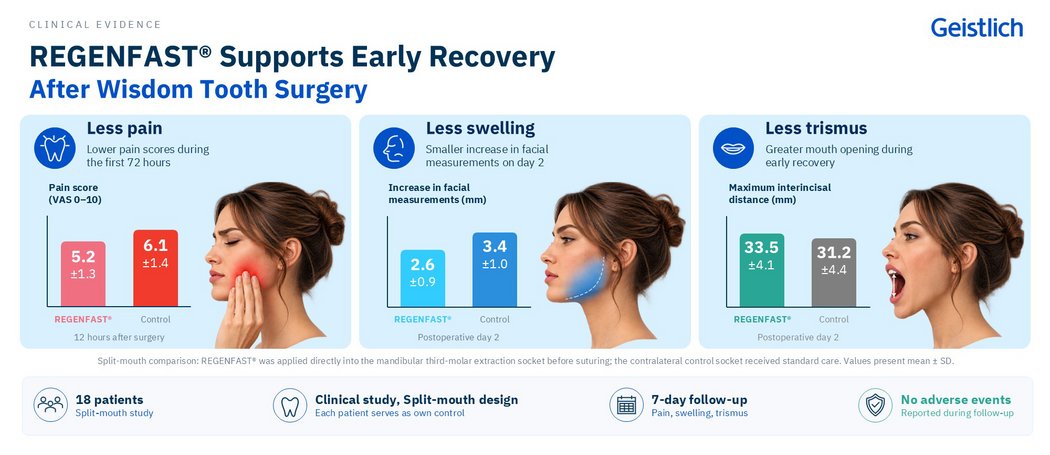
- Lower postoperative pain was observed at REGENFAST®-treated sites during the 72 hours after surgery.
- Reduced facial swelling was observed on postoperative days 2 and 5 on the REGENFAST®-treated side.
- Less pronounced trismus was observed on days 2 and 5, with mouth opening approaching baseline in both groups by day 7.
- No adverse events or postoperative complications were reported during the seven-day follow-up.
> Ronsivalle et al. J Craniofac Surg. 2026;37(6):1693–1699. Read now. <
Why Study REGENFAST® in Wisdom Tooth Surgery?
Postoperative pain, facial swelling, and trismus (limited mouth opening) are common after mandibular third-molar extraction, also known as wisdom tooth surgery. These symptoms result primarily from surgical trauma and the subsequent inflammatory response. Pain typically peaks approximately 12 hours after surgery, while facial swelling generally reaches its maximum around postoperative day 2. Although these symptoms gradually resolve, they can significantly affect patient comfort and quality of life during the first few days of recovery.¹
A recently published clinical study by Dr. Vincenzo Ronsivalle and colleagues investigated whether applying REGENFAST®, a polynucleotide-hyaluronic acid (PN-HA) gel, directly into extraction sockets could improve early postoperative recovery following mandibular third-molar surgery. The researchers evaluated postoperative pain, facial swelling, and maximum mouth opening during the first week after surgery.¹
How Does REGENFAST® Support Tissue Regeneration?
REGENFAST® combines polynucleotides and hyaluronic acid, two components associated with tissue repair and regeneration. Hyaluronic acid has been extensively studied for its role in wound healing and tissue repair, while polynucleotides have been associated with regenerative processes in soft tissues.2,3,4,5
Clinical evidence has shown that REGENFAST® is safe for oral surgical use and may support wound healing and favorable clinical outcomes in regenerative dental procedures.4,5 Building on these clinical observations, Ronsivalle and colleagues investigated whether REGENFAST® could also help reduce postoperative discomfort following mandibular third-molar extraction.
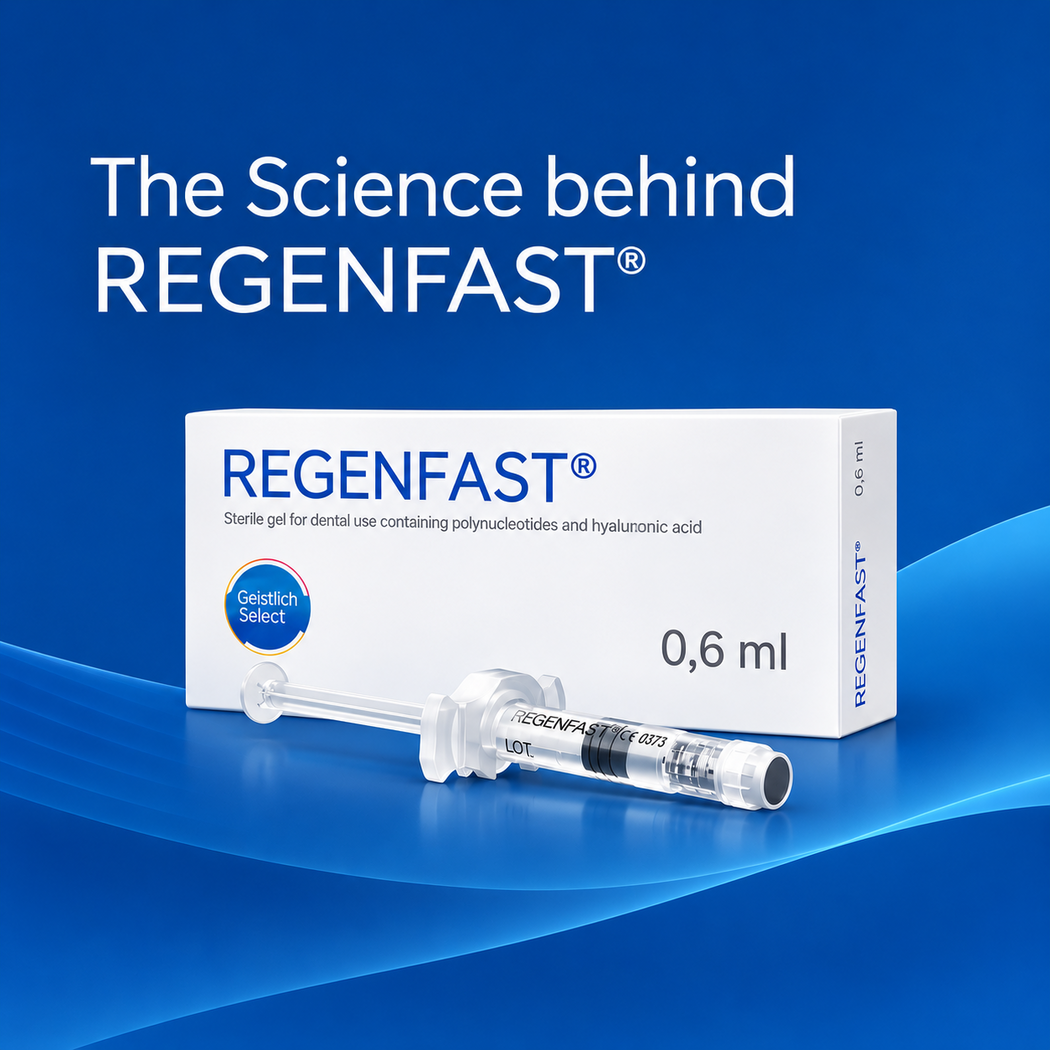
Discover the Science behind REGENFAST®
Explore how the combination of polynucleotides and hyaluronic acid is designed to support tissue regeneration and wound healing.
REGENFAST® After Wisdom Tooth Extraction: Clinical Study Findings
The researchers conducted a single-center, retrospective, split-mouth comparative study involving healthy adults undergoing bilateral surgical extraction of partially impacted mandibular third molars. Each participant contributed one REGENFAST®-treated site and one control site, allowing patients to serve as their own controls and reducing the influence of individual differences on treatment outcomes.
The final analysis included 18 patients (11 men and 7 women) with a mean age of 26.9 ± 4.0 years. All participants were classified as healthy (American Society of Anesthesiologists Physical Status I) and presented with bilateral Class II, type B mandibular third-molar impactions. Patients with factors potentially affecting healing or postoperative recovery, including regular smoking, pregnancy, recent anti-inflammatory medication use, or preoperative oral pain, were excluded.
REGENFAST® Application Protocol
At the test site, REGENFAST® was applied directly into the extraction socket following tooth removal and immediately before suturing. The control site received the same surgical treatment without the adjunct. All procedures were performed by a single experienced oral surgeon using a standardized surgical protocol.
How Were Postoperative Outcomes Measured?
The researchers assessed three key indicators of postoperative recovery:
- Pain: Measured using a 0–10 Visual Analog Scale (VAS) at 12 hours after surgery and daily for seven days.
- Trismus: Evaluated by measuring maximum interincisal distance (MID) before surgery and on postoperative days 2, 5, and 7.
- Facial swelling: Assessed using standardized three-dimensional facial scans obtained before surgery and on postoperative days 2, 5, and 7.
Less Pain During the First 72 Hours
REGENFAST®-treated sites showed lower postoperative pain during the first three days following surgical extraction of partially impacted mandibular third molars. Pain peaked approximately 12 hours after surgery in both groups before gradually declining, with the most notable differences observed at 12 hours and on postoperative days 2 and 3.
At 12 hours, the mean pain score was 5.2 ± 1.3 at REGENFAST®-treated sites, compared with 6.1 ± 1.4 at control sites. On postoperative day 2, mean pain scores were 4.1 ± 1.2 and 4.9 ± 1.3, respectively. These differences decreased over time, with pain scores becoming similar between groups by postoperative days 5–7. The researchers also reported slightly lower ibuprofen consumption during the first 72 hours following procedures in which REGENFAST® was used.
Reduced Facial Swelling After Third-Molar Surgery
Facial swelling peaked on postoperative day 2 before gradually decreasing toward baseline by day 7. REGENFAST®-treated sites demonstrated smaller increases in facial measurements during early recovery compared with control sites. On postoperative day 2, the mean increase was 2.6 ± 0.9 mm on the REGENFAST®-treated side, compared with 3.4 ± 1.0 mm on the control side. By day 5, the corresponding values had decreased to 1.2 ± 0.7 mm and 1.8 ± 0.8 mm, respectively.
Three-dimensional facial deviation maps supported these findings, showing less outward tissue displacement in the masseteric-buccal region on the REGENFAST®-treated side. By postoperative day 7, swelling had largely returned toward baseline in both groups, with minimal differences remaining between treatment sites.
Less Trismus and Improved Mouth Opening
Trismus, or restricted mouth opening, is another common consequence of third-molar surgery that can interfere with everyday activities such as eating and speaking. Although maximum mouth opening decreased after surgery in both groups, the reduction was less pronounced on the REGENFAST®-treated side during early recovery.
On postoperative day 2, the mean maximum interincisal distance was 33.5 ± 4.1 mm on the REGENFAST®-treated side, compared with 31.2 ± 4.4 mm on the control side. The difference remained evident on day 5, but by day 7, mouth opening had largely recovered in both groups, and the remaining difference was small and not statistically significant.
Correlation analysis also revealed an association between postoperative symptoms, with higher pain scores linked to reduced mouth opening and greater facial swelling. These relationships were strongest around postoperative day 2, coinciding with the peak inflammatory response.
See REGENFAST® in Clinical Practice
Discover how dental experts use REGENFAST® in their treatment protocols and share their clinical experiences with this biomaterial.

What Do These Findings Mean for Clinical Practice?
The findings suggest that REGENFAST® may be a useful adjunct to standard surgical care for managing early postoperative discomfort following impacted mandibular third-molar extraction. For clinicians seeking ways to reduce postoperative pain and swelling while supporting the recovery of normal mouth opening, the results provide encouraging clinical evidence for REGENFAST®.
Importantly, no adverse events or postoperative complications were reported during the seven-day follow-up. All patients experienced uneventful healing, with no observed infections, abscesses, allergic reactions, or medication intolerance. Operative times were also comparable between the two groups, suggesting that adding REGENFAST® to the surgical protocol did not increase procedural complexity.
However, the small sample size, retrospective design, and short follow-up period should be considered when interpreting these findings. Larger prospective, randomized clinical trials are needed to confirm the observed benefits.
Conclusion: REGENFAST® as a Promising Adjunct for Early Recovery
This retrospective split-mouth clinical study suggests that applying REGENFAST® directly into extraction sockets following mandibular third-molar surgery may help improve early postoperative recovery. Compared with standard surgical care alone, REGENFAST®-treated sites showed less pain, reduced facial swelling, and less pronounced limitation of mouth opening during the first postoperative days, without an observed increase in operative time or reported adverse events.
The differences were most evident during the early inflammatory phase and largely diminished by the end of the first postoperative week. Overall, these findings add to the emerging clinical evidence supporting the potential role of REGENFAST® in regenerative dentistry and warrant further investigation of its use for managing short-term postoperative discomfort.
Learn more about REGENFAST®
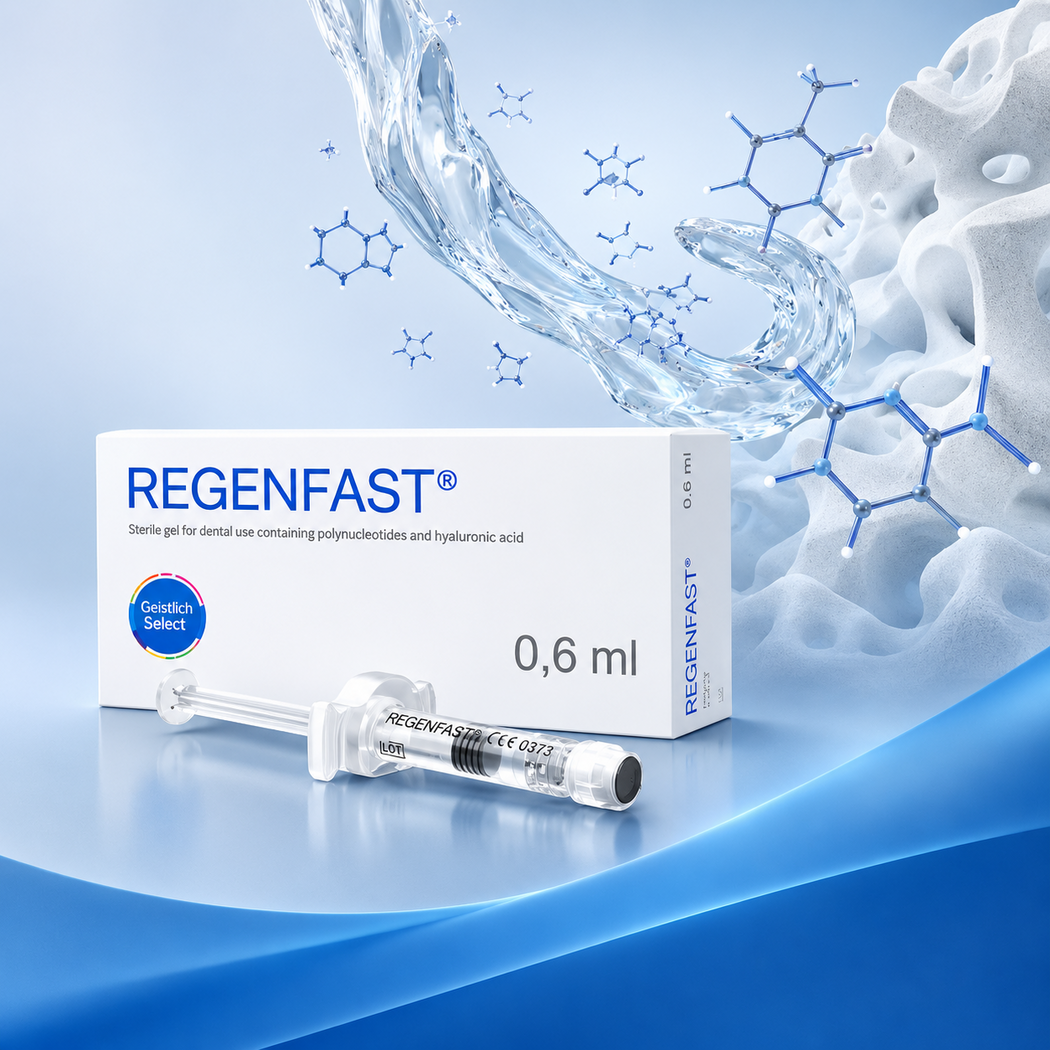
Explore the properties, clinical applications, and available product information for REGENFAST®.
References
- Ronsivalle V, et al.: J Craniofac Surg. 2026 Jun 1;37(6):1693-1699. (clinical study)
- Litwiniuk M, et al.: Wounds. 2016 Mar;28(3):78-88. (review article)
- Colangelo MT, et al. J Biol Regul Homeost Agents. 2021;35:355-362. (preclinical study)
- Beretta M, et al.: Int J Periodontics Restorative Dent. 2025 Mar 6;45(2):209-219. (clinical study)
- Cairo F, et al.: Int J Periodontics Restorative Dent. 2025 Mar 6;45(2):153-163. (clinical study)